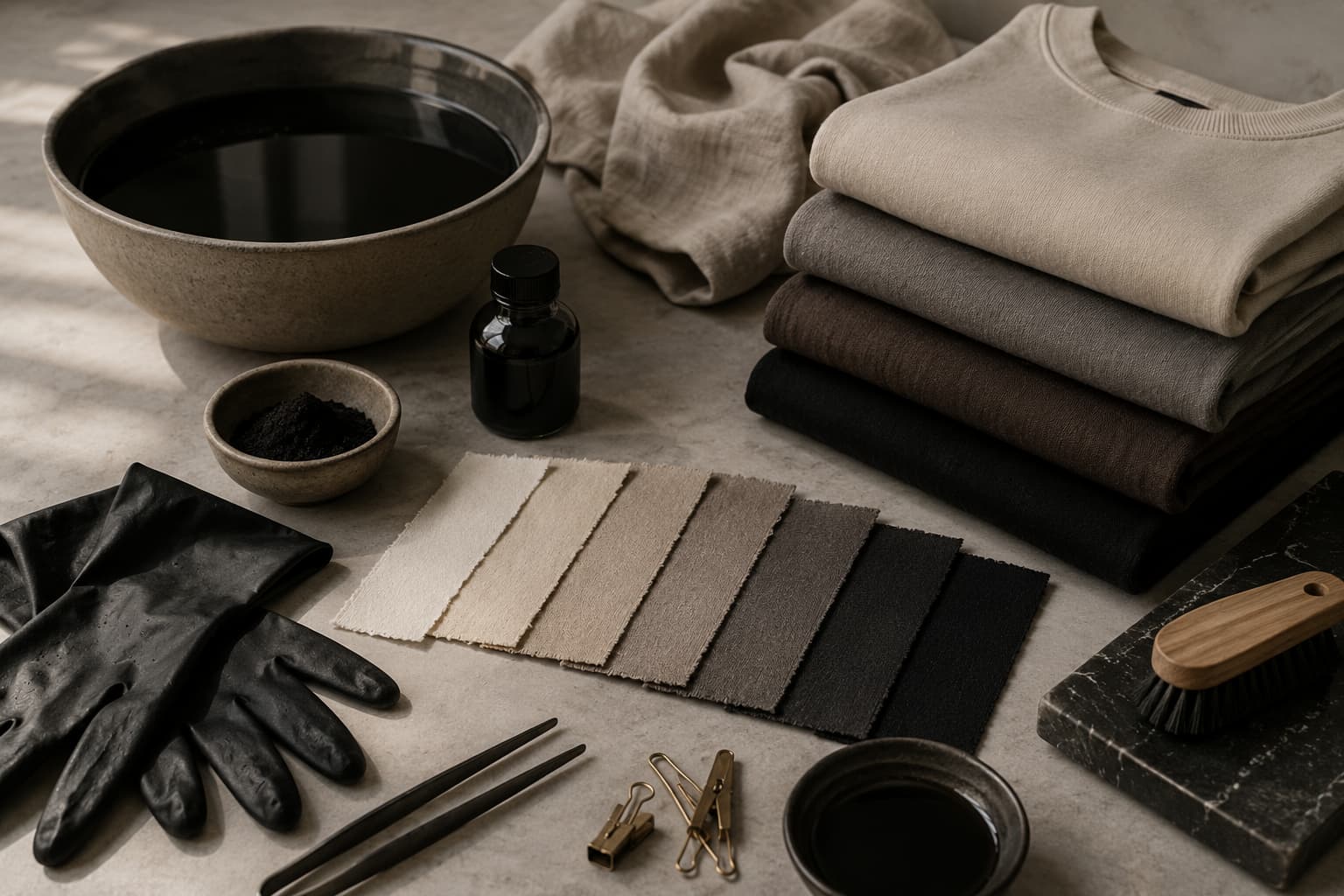
Clothes dyeing tips can help you turn a faded, stained, or boring garment into something more wearable. Dyeing is simple in theory, but small mistakes can change the result. Fabric choice, color selection, water temperature, stirring, timing, and rinsing all matter. A better process helps you avoid patchiness, dull color, or unwanted staining. It also helps you choose projects that are actually worth doing. A useful DIY dyeing process gives you more control from the first test to the final wash. Good dyeing starts before the dye touches fabric.
Clothes dyeing tips start with fabric because material decides how color absorbs. Cotton, linen, rayon, silk, wool, nylon, and polyester respond differently. A practical fabric dyeing plan begins with the care label. Natural fibers usually take color more easily. Synthetic blends may produce softer or uneven results. Some stitching may remain the original color because thread content differs from fabric. Color Confidence Starts at Home: The Ultimate Guide on How to Dye Clothes at Home – Step-by-Step Guide and Tips helps you prepare for those details instead of being surprised later.
Clothes dyeing tips should include realistic color planning. Dye usually adds to the original color, not erases it. A pale blue shirt dyed yellow may turn green. A tan garment dyed red may look warmer and darker. A useful color mixing approach helps you predict outcomes before committing. Choose darker shades when covering stains or uneven fading. Choose related shades when refreshing color. Avoid expecting a black garment to become pastel. Dyeing works best when you respect the starting point and build from there.
Preparation reduces stress and mess. Gather gloves, containers, measuring tools, stirring utensils, towels, and a protected surface before you start. A strong home dye setup keeps the process controlled. Do not improvise halfway through with wet fabric and open dye nearby. Protect sinks, counters, floors, and clothing. Keep pets and children away from the workspace. Read instructions fully before beginning. The most polished results often come from calm setup rather than advanced skill.
Clothes dyeing tips for even coverage focus on movement and space. Fabric needs enough room to move freely in the dye bath. A helpful garment dyeing routine includes steady stirring, proper timing, and careful rinsing. Folds can create darker or lighter spots if the item stays still too long. Use enough water and dye solution for the garment size. Follow heat recommendations. Color Confidence Starts at Home: The Ultimate Guide on How to Dye Clothes at Home – Step-by-Step Guide and Tips can help make these steps easier to remember.
Clothes dyeing tips do not stop once the garment leaves the dye bath. Rinsing, washing, and drying affect the final result. A useful post-dye care routine helps remove excess color and reduce transfer. Wash the item separately at first. Use cool water when recommended. Dry according to fabric needs. Check whether color looks even after drying, not only while wet. Wet fabric often appears darker. Final judgment should happen after the garment is fully dry and styled with other pieces.
Keep notes after each project. Record fabric content, original color, dye shade, timing, temperature, and final result. A thoughtful color confidence routine makes future projects easier. For full home dyeing basics, read the How to Dye Clothes at Home article. For color-refresh ideas, continue with the Fabric Color Refresh article. For method comparisons, explore the DIY Clothing Dye Methods article. Color Confidence Starts at Home: The Ultimate Guide on How to Dye Clothes at Home – Step-by-Step Guide and Tips helps make dyeing more intentional.


Leave a comment